
Development

Development of entire resort and property projects — from the site through concept and approval to running operations, from a single source.

What we do

From the site to the running business

A resort is created in eight steps — from development to running operations. Most companies cover one of them and then hand over to the next. We do all eight: one holistic concept, from a single source.

Site
01

Site

Sourcing and securing the land — the start of every development. Sites nobody has yet thought of as a resort, usually acquired through our network.

How we work

  • Sites through our network and our own research
  • First check of location, surroundings and access
  • Talks with owners and the municipality
  • Securing the site via option or exclusivity

What you get

  • Short site assessment
  • Use and capacity assumptions
  • Rough calculation
  • Secured site

A piece of land becomes a project that can add up.
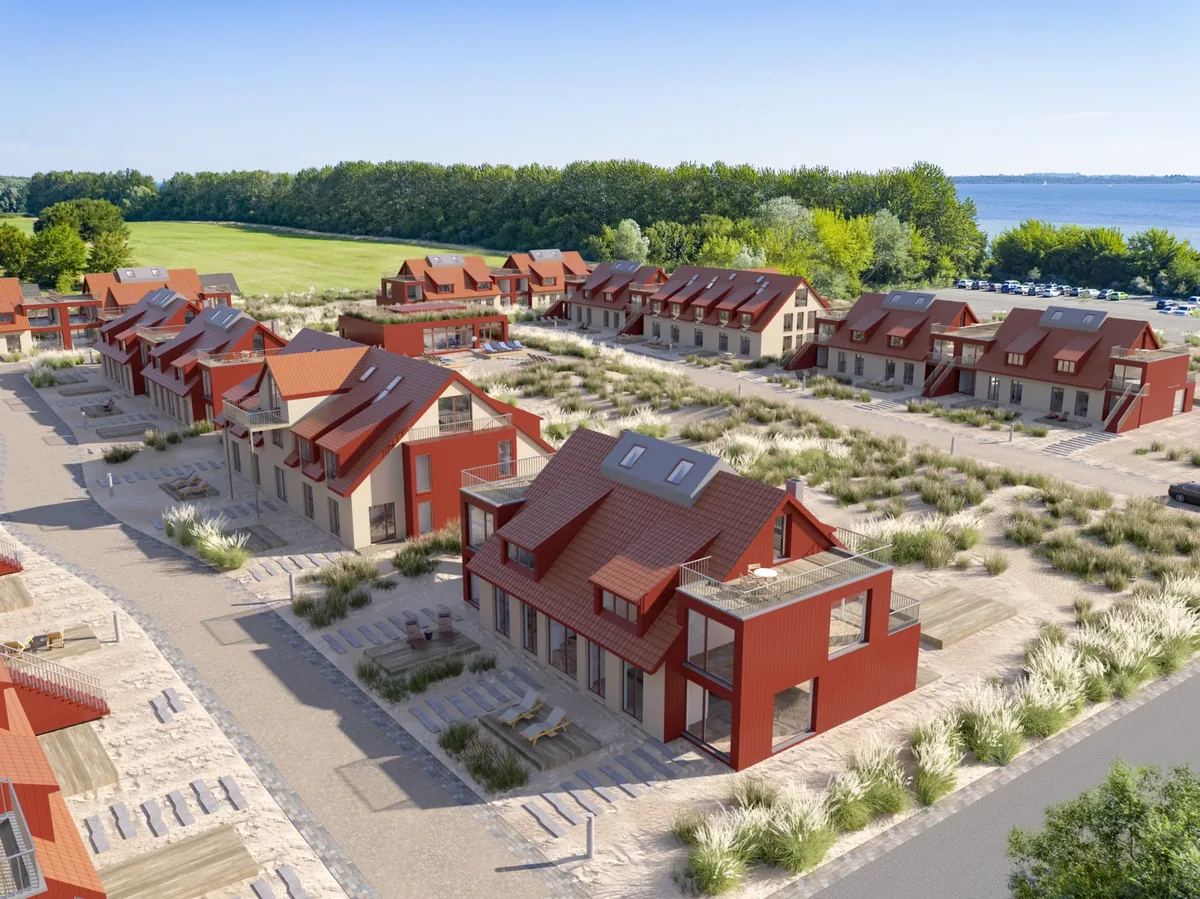
Product development
02

Product development

Architecture, room count, food and beverage, target group — modelled as an operating concept. The site becomes a viable product.

How we work

  • Define target group and positioning
  • Plan unit mix, food and beverage and leisure
  • Align architecture with operations
  • Model profitability over ten years

What you get

  • Operating concept
  • Room and area programme
  • Investment and income model
  • Design with the architecture team

The product is settled before the first building application is written.

Planning permission
03

Planning permission

Development plan, approvals, negotiations with municipality and authorities. The longest step — and the one where most fail.

How we work

  • Coordinate land-use planning with the municipality
  • Commission and supervise expert reports
  • Prepare public participation
  • File the building application and follow it through

What you get

  • Development plan
  • Urban development contract
  • Building permit
  • Schedule and cost frame for construction

The step where most projects fail — and the one that decides what the land is worth.

Construction
04

Construction

Delivered by the general contractor, project management, architects and specialist engineers — country by country. We consolidate the information, bring the parties together, review it and act as a sparring partner for the owner.

How we work

  • Bring together reports from project management and planners
  • Review and interpret schedule, cost and quality updates
  • Prepare decisions for the owner
  • Keep the link to marketing, furnishing and operations

What you get

  • One condensed status report instead of separate updates
  • Schedule and cost position put in context
  • Decision papers with a recommendation
  • Construction, sales and pre-opening kept in sync

Delivery and liability stay with the appointed professionals on site — we make sure the owner always knows where the project stands.

Marketing & sales
05

Marketing & sales

Positioning, brand, distribution. We market the units — often already during construction.

How we work

  • Set positioning, price architecture and story
  • Build brand, collateral and campaign
  • Approach buyers directly
  • Accompany the sale through to closing

What you get

  • Marketing suite in print, online and film
  • An exposé for every unit
  • Prospect and reservation list
  • Units sold

Units often sell while construction is still running.

Interior design
06

Interior design

Interior architecture, materials, furnishing, fit-out. The shell becomes the experience that carries the operation — delivered by our own team.

How we work

  • Derive the design line from the operating concept and the region — Mediterranean, alpine or Nordic
  • Develop material, colour and furnishing concept
  • Select samples and suppliers, bring in brand partners for fittings and appliances
  • Put together furniture packages per unit type
  • Manage procurement and furnishing — from tender to installation
  • Supervise sampling and installation on site

What you get

  • Interior concept with materials chosen for the operating purpose
  • Furniture packages and furnishing schedule with budget
  • Show apartment or show room
  • Turnkey furnished units

Spaces guests remember and that the operator is glad to run.

Pre-opening
07

Pre-opening

Staff, processes, systems, suppliers. Everything is ready before the first guest arrives.

How we work

  • Recruit, hire and train the team
  • Define processes, manuals and standards
  • Set up systems: booking, point of sale, locking, reception
  • Negotiate suppliers and contracts

What you get

  • Staffing plan and trained team
  • Process and quality manual
  • Running systems
  • Opening plan

On opening day everything is rehearsed before the first guest arrives.

Operations
08

Operations

Opening and running the business — especially the first years. We still run two properties ourselves — this is where you see the concept come alive.

How we work

  • Accompany opening and the start-up phase
  • Steer occupancy, rates and distribution
  • Monitor cost, quality and guest satisfaction
  • Annual planning together with the owners

What you get

  • Monthly reports with key figures
  • Budget and forecast
  • Maintenance and capex plan
  • Distributions to the owners

Day-to-day operation is where a concept proves itself.

That is why we take responsibility for the result, not just for our part of it. We take on operations ourselves and lead the project to success.

Use concepts

Not every property has to become a hotel

The viability of a property is decided by how it is used. We analyse which concept suits the location and carries it long term — and say openly when an idea does not work.

01

Branded residences

For developers with 35 to 80 units

Apartments carrying the name and standards of a hotel or lifestyle brand. The price premium is real and averages around a third. The real obstacle is not project size but the minimum licence fee: major brands ask two to five million US dollars, which at usual royalty rates presumes sales volume in the high tens of millions. Anyone below that needs a different route — and we know it.

  • Brand selection by segment and area of protection, settled before the first approach
  • Franchise rather than management agreement — how the large groups predominantly award today
  • Third-party operator on revenue- and profit-based fees instead of a minimum licence fee
  • Calculating the ongoing management fee: below a certain unit count the owners carry it noticeably
  • Price premium calculated project by project, never from market averages
  • “Two-hour home”: a serviced second home within two hours of a metropolis — a segment in which northern Germany does not yet appear
02

Serviced apartments & boarding houses

For owners of conventional space

Longer stays, far less staff, steadier occupancy across the year. For many existing buildings — office, hotel or retail — this is the most viable conversion, because operations run on a fraction of a hotel's structure.

  • Feasibility: layout, access, fire safety and parking within the existing building
  • Planning law: accommodation versus residential use, change of use, grandfathering
  • Operating model: staffing ratio, cleaning cycle, self check-in, breakfast solution
  • Sales mix of direct bookings, corporate clients and long-stay contracts
  • Minimum stay and the six-month VAT threshold
  • Brand or operator partnership where running it yourself is not wanted
03

Condominium & rental pool

For developers who want to sell and still operate

Units go to many owners while operations stay in one pair of hands. The model funds development through sales and secures unified operation at the same time — provided the legal structure holds. We have built it in our own properties and run it to this day.

  • Declaration of division and community rules that genuinely support operations
  • Lease model combining a guaranteed minimum and an occupancy-based share of revenue
  • Owners' rights of personal use, cleanly separated from letting
  • Division of private and common property along operational lines
  • Service charge, maintenance reserve and refurbishment over the term
  • Review of whether the rental pool would qualify as a collective investment scheme
04

Conversion & repositioning

For owners of existing properties

A property that no longer works in its current use is rarely a demolition case and usually a concept case. We examine without prejudice what the building can carry — and weigh the options against each other before anything is designed.

  • Survey and feasibility of several use options side by side
  • Mixed use: accommodation, residential, food and beverage, and space for third parties
  • Phased conversion while the property stays open
  • Change of operator, contract settlement and handover
  • Investment required against earnings development over ten years

How we test a concept

Before a concept goes into planning it has to pass four tests. If it fails one, we work on the alternative — not on the brochure.

  • Does the operation carry itself, including in a weak year?
  • Does the legal structure hold — planning law, division, operator agreement, tax?
  • Does the buyer or guest actually exist, or only the assumption that they do?
  • Will the property still be sellable in ten years without a full refurbishment first?
Services

What we actually do

Along the four phases — from the first assessment to running operations.

01

Advise

Before capital is committed: assess, model, judge.

  • Consulting
02

Develop

From the site to an approved project.

  • Concept
  • Interior & Design
03

Operate

After handover, the next step of our work begins.

  • Asset Management
  • Restructuring & operator models
From one house

A resort created from one house — from the site to the guest.

The first step

Let's talk about your plans.

A conversation in which we listen and give an honest assessment of what is possible — free of charge and without obligation.