Holiday Property Investments – 8 Tips for Buying a Holiday Property
Stiftung Warentest has looked into the topic of holiday properties as an investment and carried out a practical test. They have taken a closer look at eight examples of holiday properties offered as investment opportunities and, based on this, have compiled eight tips for prospective buyers. Some of these will certainly not be new to you, but perhaps you will gain a fresh perspective on certain criteria, or perhaps you are just starting out and this will help you take your first steps – a journey on which we would be happy to accompany you.
• Use
Before buying a holiday home, buyers should be clear about how they intend to use it. Is it purely an investment, with the focus on letting it out? Or do you want to use the property exclusively yourself, so that it serves as a retirement provision or even a permanent residence in later life? Hybrid models are also becoming increasingly popular. For instance, many investment properties offer buyers the option to use the property themselves for a limited period – for the rest of the time, the property is let out. Two current examples from our portfolio: Ombria Resort or Bades Huk.
• Type of holiday home
What would you like? A detached, standalone house, a small, cosy flat or an apartment in a holiday complex? As a buyer, you need to ask yourself how flexibly you wish to use your accommodation. A standalone flat or house offers complete flexibility for your own use, both in terms of the length and frequency of your stays. However, you should bear in mind that you’ll have to take care of everything relating to the property yourself and find the right support. Properties that form part of a resort, on the one hand, do not offer as much flexibility for personal use, but on the other hand, you won’t have to worry about a thing. Generally speaking, however, it’s worth taking a closer look here, as there are now a wide variety of models available that offer you varying degrees of flexibility or other benefits. The distance from your main residence also plays a significant role – do you always travel there yourself for maintenance, or does a facility management company handle this for you?
• The location
For holiday lettings, a well-developed local infrastructure right next to the holiday property is a key consideration. Holidaymakers do not want to have to travel long distances to do their shopping or get to the beach, for example. Restaurants and shopping facilities should be within easy reach. The same applies to leisure activities: a swimming pool, sauna, fitness facilities, golf course or marina offer ways to further enhance the holiday experience and, above all, extend the season.
• Avoid tourist hotspots
Anyone looking for a high return should avoid well-known tourist destinations or regions. Prices per square metre have risen sharply here in recent years. However, this does not mean that it is generally no longer possible to purchase a holiday property on the popular Baltic or North Sea coasts. Here, however, it is worth looking to less well-known and therefore less crowded regions.
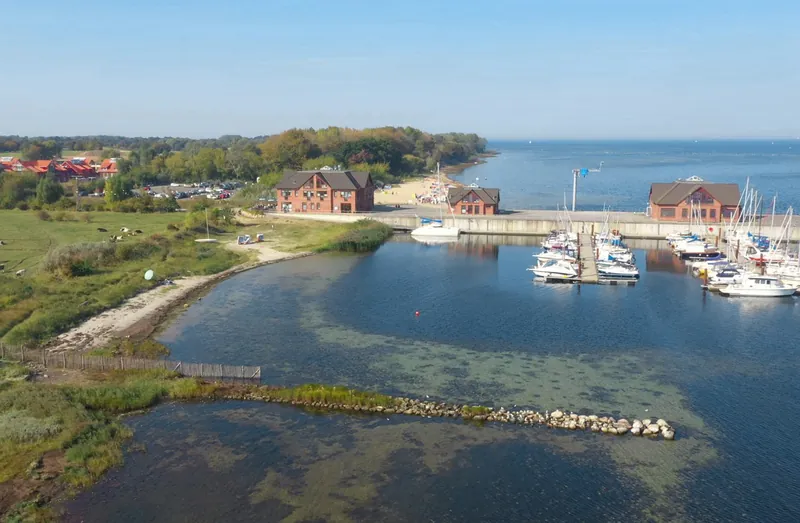
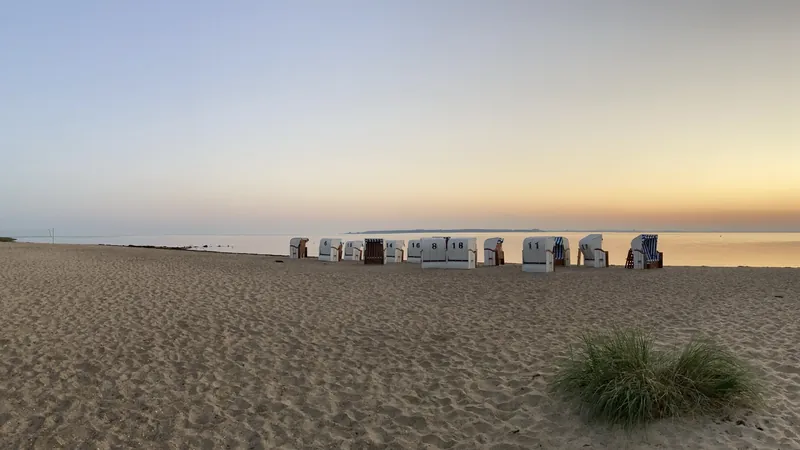
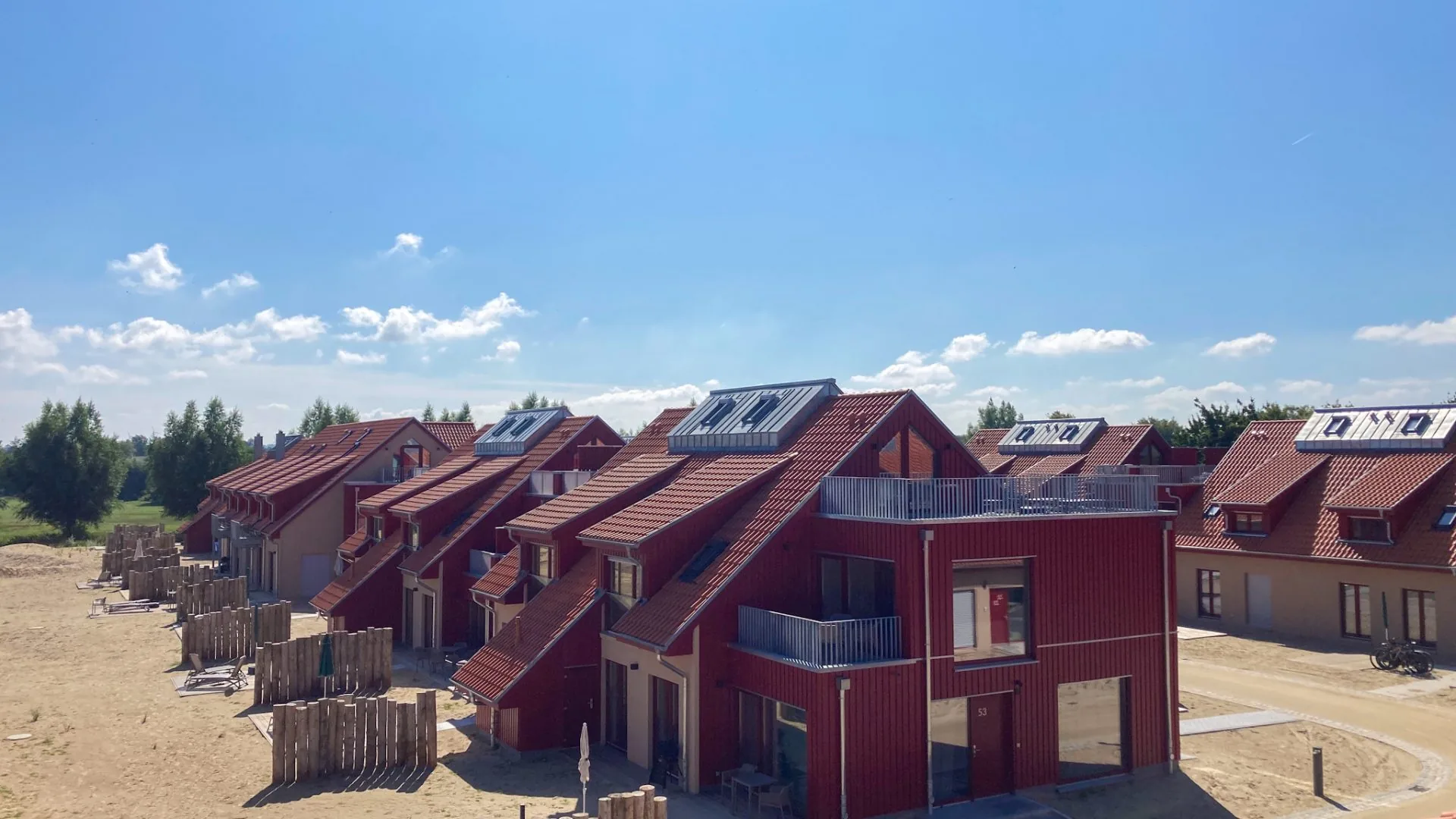
Hamid Farahmand, a project developer and operator of holiday resorts, says: “During the summer months, almost anything can be let on the North Sea and Baltic Sea coasts. The real challenge is achieving high occupancy rates in the other months as well.” One example of this is the Bades Huk holiday resort in Hohen Wieschendorf, situated directly on the Baltic Sea between Boltenhagen and Wismar. In recent years, a holiday complex has been built here comprising 77 holiday apartments and 12 double rooms, a reception, a fitness and sauna area, and a small shop. Right next to the resort, holidaymakers will also find a modernised 18-hole golf course and a marina featuring an Italian restaurant and a café.
• Interiors and other highlights
In a market study* by Fewo-Direkt, one in three holiday property owners stated that holidaymakers want more comfort in terms of facilities. These include a well-equipped fitted kitchen, a stable internet connection and a modern bathroom. A modern and high-quality interior design makes the property even more attractive.
Features such as a fireplace, a sauna within the flat itself, or special facilities for pets are also helpful.
• Income and expenditure
The big unknown when buying a holiday home as an investment is the occupancy rate. Only when this is right does the whole venture become financially viable. On average, you can expect an annual occupancy rate of 40 per cent. This can vary significantly depending on the location and many other factors, such as the property’s amenities or size.
Tourism boards can sometimes provide you with more precise information on this. Alternatively, property developers often commission market studies specifically for certain locations, which they are happy to share. When buying an existing property, the previous owner can, of course, provide you with exact figures from previous years.
When making your calculations, be sure to take into account other expenses, such as those for maintaining the property. Where there is a frequent turnover of guests, furniture will need to be replaced regularly. Similarly, renovation work – such as painting – is an additional cost in a holiday let, unlike with long-term letting. In the article by Stiftung Warentest, you’ll find a sample calculation showing how to work out the expected net rental yield and which costs to take into account.
• Sales and letting
To achieve good occupancy rates, the sales and marketing of the holiday property are essential. Owners of a holiday property within a holiday complex often benefit from an all-round service. An agency takes care of the marketing and letting of the properties. This service naturally comes at a cost, but it also saves a great deal of work.
Those who wish to take matters into their own hands will find a wide range of letting portals, often tailored to specific properties, regions and target groups.
As a general rule, the property should be presented well, both visually with suitable photographs and through descriptions that highlight its key features and amenities.
• Equity
Anyone deciding to buy a holiday home should be aware that this carries a slightly higher risk than a property let on a long-term basis. This has been demonstrated over the past two years, when travelling was, in some cases, restricted. But the risk can be worth it! It is also a fact that significantly higher returns can be achieved by letting holiday homes.
Banks remain cautious when it comes to financing holiday homes. Contributing a certain amount of equity when purchasing a holiday home can simplify the process and offer a little more security in the long term.
We would be happy to advise you and support you on your journey to finding your dream holiday home.
You can read the full article in the ‘Stiftung Warentest – Finanztest’ issue 10/2021, ‘Calculating correctly: How to make your holiday home worthwhile’, p. 46 ff.
* 2019 Market Study on Private Holiday Properties, published by FeWo-direkt & Engel Völkers.
Published on 13 April 2022